

A Supply Chain That Might Be Building Something Bigger Than a Marketplace

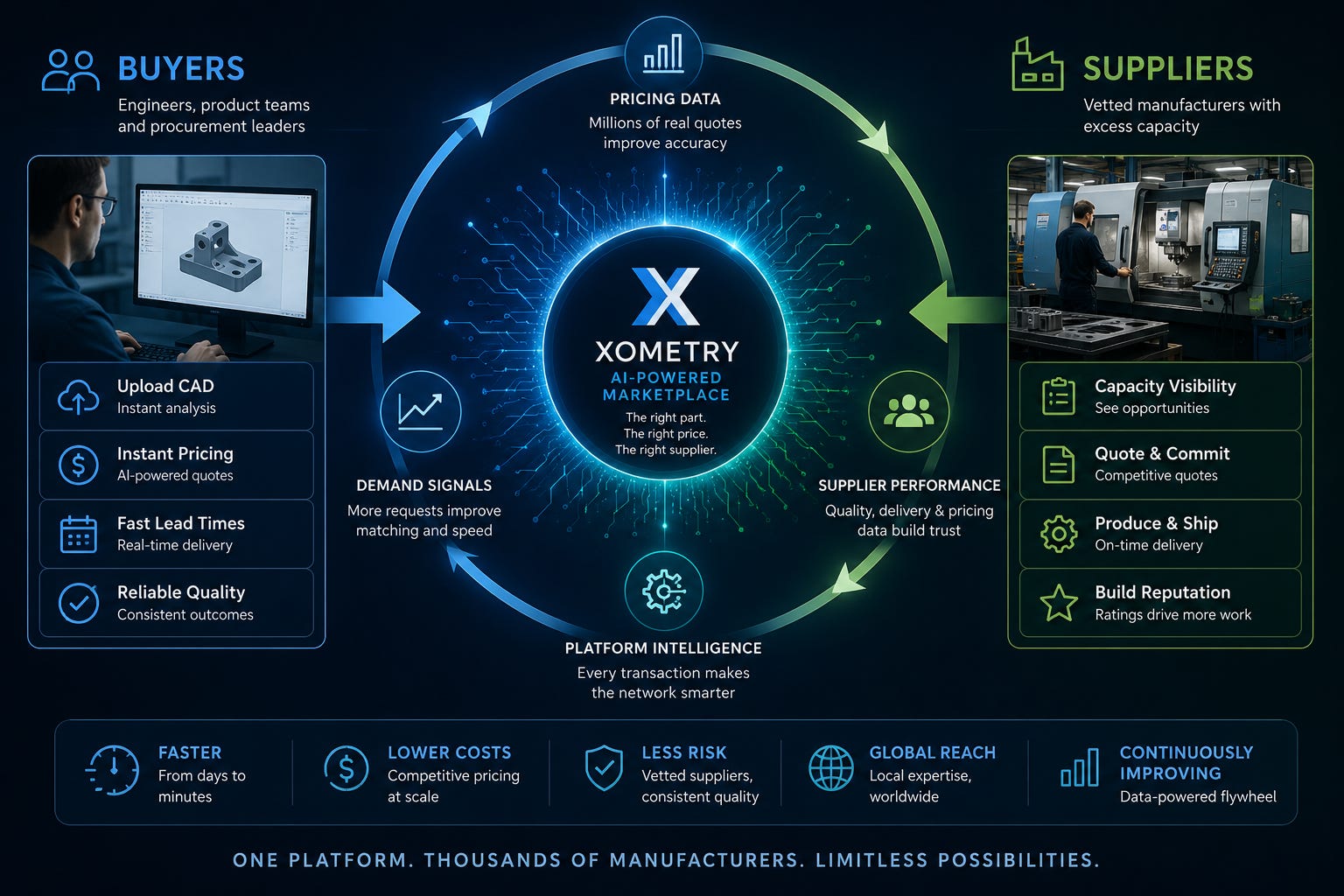
Every so often, a company appears that is not attempting to create a new product but is instead trying to modernize an entire legacy process. That deep structural shift is precisely what catches my attention about Xometry (XMTR). Most custom manufacturing still operates much the way it did decades ago, a slow, fragmented, and highly inefficient system where an engineer sends part designs to multiple machine shops, waits days for quotes, compares lead times, and negotiates pricing manually.
Xometry has transformed this landscape by building an artificial intelligence native marketplace that matches enterprise buyers with specialized suppliers globally. The core value of this model is a compounding data flywheel, because the more pricing, manufacturing, and fulfillment data that flows through the platform, the more accurate its automated instant quoting engine becomes.
The financial data proves that this infrastructure playbook is gaining severe traction. Total revenue grew 36% during the most recent quarter, powered by a 40% increase in marketplace revenue alone. Active buyers continue to expand, and adjusted EBITDA remains solidly positive, flashing a visible transition from a speculative growth narrative into real, high margin operating leverage.
The ultimate validation of this technology came through a massive, strategic partnership last month with industrial software giant Siemens (SIEGY). Siemens backed this alliance with a 50-million-dollar equity investment, directly embedding Xometry automated pricing, sourcing, and manufacturability intelligence natively into the Siemens software ecosystem. This puts Xometry marketplace capabilities directly in front of global engineers at the exact moment a part is designed, moving the company from an optional sourcing tool to a permanent piece of global industrial infrastructure.
The challenge is that the broader market has already started to recognize this immense enterprise runway. Investors are paying a steep premium for future execution, meaning the near-term margin for error has shrunk. The stock has quietly moved from $81 dollars in just a month to around $93 dollars today, fueled in part by a recent 225-million-dollar equity offering priced at $85 dollars a share that established a clear institutional floor. Full 12-month growth has been a whopping 160% from $35 to $93.
If management expands these deep enterprise relationships and continues to expand their operating margins, the future upside remains beyond meaningful.
My personal plan is to exercise patience and let this recent momentum ferment. If the stock experiences a healthy pullback into the mid to high $70s range, I may well establish a core foundational position. The most lucrative opportunities are rarely the ones that crowds chase at peak valuations, they are the businesses quietly building the invisible infrastructure that an entire global industry will rely on tomorrow.
This article is provided for informational and educational purposes only and should not be considered investment advice. Investing involves risk, including the possible loss of principal. Always conduct your own research and make investment decisions based on your individual objectives, risk tolerance, and financial situation. Past performance does not guarantee future results.